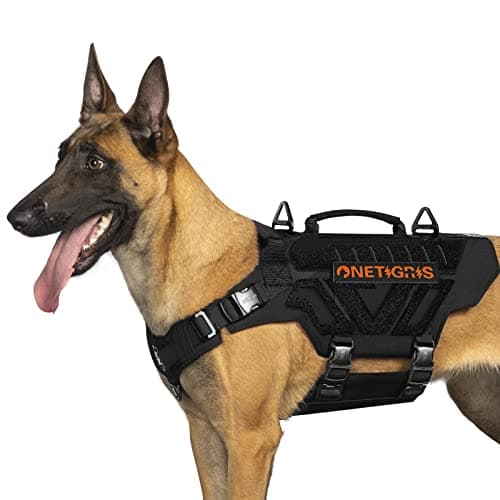
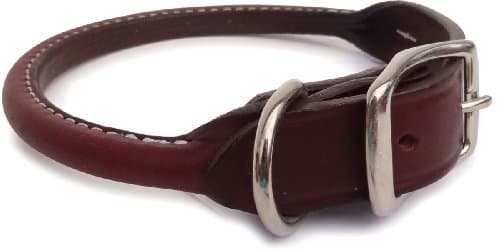
The Best Tactical Dog Collars
There is no standards body behind the word, so we scored the features instead: cast metal hardware, a welded ring, a real handle and published webbing. The results are not what the category expects.
Buy the OneTigris tactical collar if you want the handle — it is the only collar here with an integrated control handle, and on a big dog that is the one tactical feature that changes what you can do.
Buy the Max and Neo MAX if what you actually want is the metal buckle without the costume. It is the cheapest honest way off plastic hardware, and it looks like a normal collar.
Start here: the word buys you nothing
“Tactical” is not a specification. No standards body, no test method, no minimum load rating, no certification. Any manufacturer may print it on any collar, and most of them do. We set that out in full in what is a tactical dog collar, and this page is what happens when you take that seriously and rank the products anyway.
The look is borrowed from military and law-enforcement K9 equipment, and borrowed designs are borrowed for reasons. Four of the features are genuinely functional. Three are decoration. So the ranking below scores the four and ignores the three — which is why two collars that do not look remotely tactical finished ahead of collars that do.
The four features that are real
- A cast metal buckle instead of an acetal side-release. The side-release is the part that cracks in cold and shatters under a shock load. Note the qualifier: cast. Stamped or plated zinc dressed as metal hardware is not an upgrade over good acetal, and it corrodes.
- A welded ring rather than a split one. A split ring is a coiled wire that can be levered open. A welded ring is a closed loop. Small difference, completely different failure mode, and usually visible in the product photograph if you look for a seam.
- A control handle. A short loop of webbing sewn to the collar, sized for a fist. On a 90 lb dog at a vet’s door or a tailgate this is the most useful thing on the list. It also carries the highest load in normal use, which makes how it is attached the thing to inspect.
- Published webbing. Most tactical collars claim 1000D nylon. Denier is a yarn-mass figure — grams per 9,000 meters under ASTM D1907 — so it measures thickness, not strength, and only compares within the same fiber. And “1000D nylon” is not “1000D Cordura”: Cordura is a specific branded high-tenacity fabric sold in 330D, 500D, 700D and 1000D. A brand that says nylon has not said Cordura.
The three that are costume
- MOLLE laddering on a collar. On a vest it is a real load-carriage system. On a two-inch collar there is nowhere useful to mount anything, and the extra rows of stitching are extra needle holes in the webbing.
- Hook-and-loop patch panels. Harmless, occasionally useful — a DO NOT PET patch genuinely changes how strangers behave around a working dog — but not structural.
- “Military grade.” Meaningless in a consumer context. Real military webbing specifications exist and carry numbers, MIL-W-17337 among them. If a brand meant one, it would cite it. None of them do.
The disclosure problem, illustrated by one brand
OneTigris is the most interesting case in this category because it proves the disclosure is possible. On its X-Armor tactical harness it publishes real numbers: 485 lb rated buckles and a 440 lb front chest D-ring on the L and XL sizes. Almost nobody in dog gear publishes anything comparable.
On its tactical collar — the same brand, the same product family, the same aesthetic — it publishes no denier and no load rating at all. That is not an accusation of bad faith. It is a demonstration that in this category, disclosure is a choice made product by product, and that the styling tells you nothing about which choice was made.
Quick picks
The short answer, ranked and scored against our published durability rubric. Where a manufacturer does not publish a spec, we say so rather than estimating it.
| # | Photo | Product | Durability | Price |
|---|---|---|---|---|
| 1 | 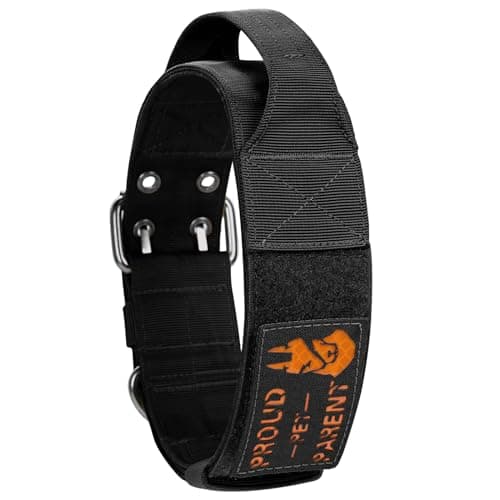 | OneTigris Tactical Dog CollarA control handle on the collar itself | 64/100 | $18.99 · Amazon |
| 2 | 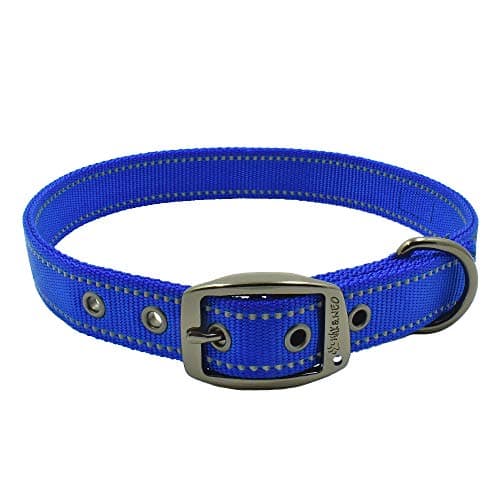 | Max and Neo MAX Reflective Metal Buckle CollarA metal-buckle nylon collar that funds a rescue | 61/100 | $15.99 · Amazon |
| 3 | 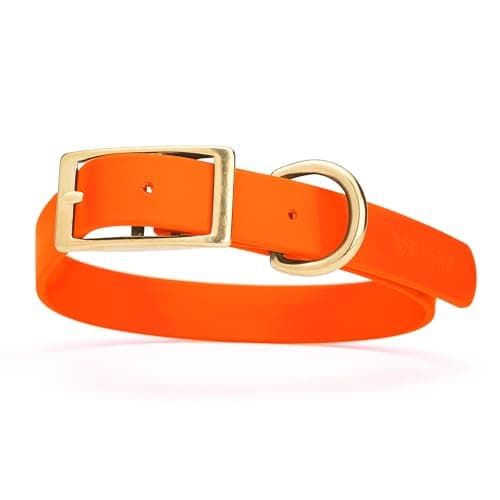 | Viper BioThane Waterproof CollarA dog that swims, rolls, and stinks up a nylon collar | 72/100 | $24.99 · Amazon |
| 4 | RuffwearNot on Amazon — buy direct | Ruffwear Front Range CollarAn everyday collar with hardware you can name | 72/100 | Check price |
| 5 | 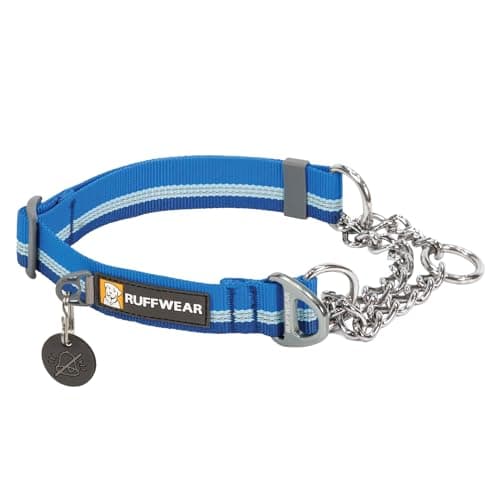 | Ruffwear Chain Reaction CollarA dog that backs out of a flat collar | 70/100 | $29.99 · Amazon |
Tap any row to jump to the full review. Prices are pulled live from Amazon as of October 18, 2026; where we have no verified live price we show none rather than a stale number. #ad — how our links work.
The picks, ranked
1. OneTigris Tactical Dog Collar
Durability score 64/100Best for: A control handle on the collar itself
A genuinely useful control handle; just note the published-spec discipline OneTigris shows elsewhere does not extend to this one.
- Design
- Padded collar with an integrated control handle (Amazon listing)
- Width
- 2 in, stated in the listing title — the only dimension OneTigris publishes for it
- Denier
- Not published for this model
- Load rating
- Not published for this model
Pros
- The handle gives you immediate close control without reaching for the leash
- Heavier webbing than a typical flat collar
Cons
- OneTigris publishes load ratings on its X-Armor harness but not on this collar
- The handle adds bulk that some dogs will not tolerate
How we assessed it: on published materials, hardware specs and construction — not long-term chew-tested. We say so because it is true, and because a claim we cannot back is worth nothing to you.
#ad Price as of October 18, 2026; Amazon prices change often, so check before you buy. How our links work.
2. Max and Neo MAX Reflective Metal Buckle Collar
Durability score 61/100Best for: A metal-buckle nylon collar that funds a rescue
The cheapest honest way to get off plastic buckles.
- Buckle
- Metal (Amazon listing)
- Webbing
- Nylon, reflective stitching (Amazon listing)
- Load rating
- Not published
Pros
- A metal buckle at a price where almost everything is plastic
- Max and Neo donates a collar to a rescue for each one sold
Cons
- No published load rating or webbing spec
- Reflective stitching, not reflective webbing
How we assessed it: on published materials, hardware specs and construction — not long-term chew-tested. We say so because it is true, and because a claim we cannot back is worth nothing to you.
#ad Price as of October 18, 2026; Amazon prices change often, so check before you buy. How our links work.
3. Viper BioThane Waterproof Collar
Durability score 72/100Best for: A dog that swims, rolls, and stinks up a nylon collar
The right collar for a dog that lives in water and filth — just understand that the 1,000 lb number belongs to the strap, not to the buckle holding it shut.
- Material
- Coated webbing: polyester core with a TPU or PVC coating
- Core break strength
- BioThane Beta 520 PET, 1 in standard: 1,000 lb (material maker's published figure)
- Buckle pull strength
- 200 lb on the same material spec — the hardware, not the strap, is the limit
- Cleaning
- Soap and water; disinfects with 10% bleach solution
Pros
- Genuinely waterproof and, per BioThane's own FAQ, stinkproof — the reason working and hunting owners buy it
- The polyester core carries a published 1,000 lb break strength in the standard 1 in profile
- Wipes clean; no absorbed mud, lake water or dead-thing smell
- Stays flexible in cold weather
Cons
- The coating adds no strength at all — BioThane says plainly that the tensile strength comes from the polyester webbing inside
- The material spec puts buckle pull strength at 200 lb, five times lower than the webbing. The buckle is the failure point, and Viper does not publish theirs
- Stiffer than nylon and it can feel slick
How we assessed it: on published materials, hardware specs and construction — not long-term chew-tested. We say so because it is true, and because a claim we cannot back is worth nothing to you.
#ad Price as of October 18, 2026; Amazon prices change often, so check before you buy. How our links work.
4. Ruffwear Front Range Collar
Durability score 72/100Best for: An everyday collar with hardware you can name
A well-made everyday collar from a brand that will not tell you what it holds.
- Webbing
- Tubelok webbing (Amazon listing)
- Hardware
- Aluminum V-ring; side-release buckle
- Size on this listing
- 20-26 in neck — the largest of the three Front Range collar sizes (11-14, 14-20, 20-26 in)
- Load rating
- Not published
Pros
- Aluminum V-ring rather than a stamped, split D-ring
- Light, and the webbing resists fraying at the buckle
Cons
- No published load rating, in keeping with the rest of the Ruffwear line
- Ruffwear's warranty excludes chewing and states no duration
How we assessed it: on published materials, hardware specs and construction — not long-term chew-tested. We say so because it is true, and because a claim we cannot back is worth nothing to you.
#ad We only show a price when we have a live one from Amazon. We don’t have one for this product right now, so we’re not going to guess. How our links work.
5. Ruffwear Chain Reaction Collar
Durability score 70/100Best for: A dog that backs out of a flat collar
The right answer for a dog that slips its collar, with the standard martingale caveat: not for unsupervised wear.
- Design
- Martingale-style limited-slip with a chain control loop (Amazon listing)
- Hardware
- Metal chain loop, aluminum V-ring
- Load rating
- Not published
Pros
- The limited-slip loop tightens just enough to stop a dog reversing out of it
- Metal control loop instead of a fabric one
Cons
- A martingale must never be left on an unsupervised dog — the loop is a snag hazard
- No published load rating
How we assessed it: on published materials, hardware specs and construction — not long-term chew-tested. We say so because it is true, and because a claim we cannot back is worth nothing to you.
#ad Price as of October 18, 2026; Amazon prices change often, so check before you buy. How our links work.
What a handle collar is actually for
Three situations, all of them real:
- The vet’s waiting room. Another dog comes through the door and you need the dog beside your leg now, not after you have gathered six feet of leash.
- The tailgate. Loading and unloading a big dog from a truck is a two-hands job, and one of them should be on the dog.
- The loose dog. Somebody’s off-lead dog is coming down the sidewalk and yours needs to be under physical control in under a second.
What it is not for is walking. A collar handle is a control point, not a lifting point and not a leash substitute, and a handle carrying a dog’s full weight is a harness’s job. Ruffwear’s Web Master — which we rank in the most durable harnesses — has a proper lift handle and a three-point structure to carry it, and even Ruffwear publishes no rating for that handle.
Width, padding and the neck underneath
Tactical collars run wide — usually 1-1/2 to 2 in — and that is genuinely useful on a heavy dog, because force spreads over contact area. Two limits worth knowing:
- Very wide collars restrict head movement on a short, thick neck. If your dog cannot comfortably put its nose to its shoulder, the collar is too wide or too rigid.
- Padding traps heat and moisture. A padded 2 in collar on a double-coated dog in summer is a warm, damp band that never dries. Check under it weekly.
What we would actually put on a working dog
A metal-buckle collar with a welded ring for ID and a handhold, plus a harness for anything involving load. If the dog swims or works filth, make the collar coated webbing rather than nylon — BioThane publishes a 1,000 lb break strength for its standard 1 in Beta 520 profile and states the material neither absorbs water nor holds odor, which is more than any tactical nylon collar will tell you.
And keep the collar off the dog in a crate. A handle is a snag hazard on a crate bar, and so is a martingale loop — see our martingale roundup for the full case.
Frequently asked questions
What makes a dog collar 'tactical'?
Nothing standardized — there is no test method, no minimum load rating and no certifying body behind the word, so any manufacturer may use it. In practice it describes an aesthetic borrowed from military and law-enforcement K9 gear: nylon webbing, a metal buckle, MOLLE laddering, a patch panel and muted colors. Four of the features that look imply are genuinely functional (cast metal buckle, welded ring, control handle, published webbing weight); MOLLE on a collar, patch panels and the phrase 'military grade' are decoration.
Are tactical dog collars actually stronger?
Sometimes, and not because they are tactical. What makes a collar stronger is a cast metal buckle instead of an acetal side-release and a welded ring instead of a split one — both of which you can get on collars that look completely ordinary. Note that almost no collar in this category publishes a break strength or a working load at all, so 'stronger' is generally an inference from hardware type rather than a measured claim.
Is 1000D nylon the same as 1000D Cordura?
No, and the difference matters. Cordura is a specific branded high-tenacity fabric sold in 330D, 500D, 700D and 1000D weights. '1000D nylon' names a yarn weight and nothing else. Denier itself is a mass measure — grams per 9,000 meters under ASTM D1907 — so it describes thickness rather than strength, and it only compares meaningfully within the same fiber type. A review that upgrades 'nylon' to 'Cordura' is inventing a spec.
Is a collar handle worth it?
On a large dog, yes — it is the one tactical feature that changes what you can physically do. It gives you close control at a vet's door, at a tailgate, or when a loose dog appears, without gathering six feet of leash first. It is not a lifting point and not a leash substitute: carrying a dog's weight is a harness's job, and a harness with a proper lift handle has the three-point structure to support it.
Should a tactical collar have MOLLE webbing?
It makes no practical difference. MOLLE is a real load-carriage system on a vest, where there is area to mount pouches. On a two-inch collar there is nowhere useful to attach anything, and the extra rows of stitching are extra needle holes through the webbing. Patch panels are harmless and occasionally useful — a 'DO NOT PET' patch genuinely changes how strangers behave around a working dog — but neither feature is structural.
How wide should a tactical collar be?
1-1/2 in suits most large dogs. Width spreads force across a bigger contact area, which is a comfort gain rather than a strength gain. Two limits: a very wide or rigid collar restricts head movement on a short, thick neck — if the dog cannot put its nose to its shoulder, it is too much — and a padded wide collar on a double-coated dog traps heat and moisture, so check the skin under it weekly.
Sources
Every spec on this page traces to one of these. Where a manufacturer does not publish a figure, we say “not published” rather than estimating it.
- OneTigris — X-Armor Tactical Harness (1000D nylon; published 485 lb buckle and 440 lb front D-ring ratings)
- Cordura — Classic fabric yarn sizes (330D / 500D / 700D / 1000D)
- Denier explained — ASTM D1907 skein method (grams per 9,000 meters)
- BioThane — Beta 520 PET material spec (1,000 lb strap break strength; 200 lb buckle pull strength)
- Ruffwear — warranty terms (chewing excluded; no duration stated)