The Best Dog Crates for Puppies
A puppy crate is the one crate purchase where buying too big is correct, because a divider panel turns one crate into every size the dog will need. Which makes the divider, not the wire, the thing to shop for.
The verdict
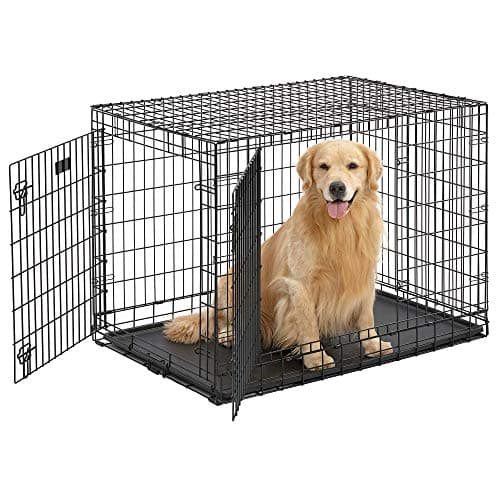
Buy the MidWest 36-inch double-door iCrate. It is also the budget pick— the cheapest thing on this page by a wide margin — and it wins for one structural reason: the divider panel is included, so a single crate covers a puppy at ten weeks and the 41–70 lb adult it becomes, which is the entire argument for buying at 36 inches. Two doors at this price is genuinely useful, because a 36 inch crate rarely fits a room in only one orientation. If your puppy turns out to be a latch-worker, the Diggs Evolv is the upgrade and the only crate here with a dual latch the maker states cannot be opened from inside, plus five sizes with published height and weight bands. If the crate has to live in a sitting room, the New Age Pet ecoFLEX is the one piece of crate furniture here whose material will not swell where a puppy has an accident. One thing to settle before you order: for this exact iCrate model number, two retailers publish exterior dimensions that differ by more than an inch in two axes, so measure your space against the larger figure. Prices come from our live price layer as of November 23, 2026.
Quick picks
The short answer, ranked and scored against our published durability rubric. Where a manufacturer does not publish a spec, we say so rather than estimating it.
| # | Photo | Product | Divider, latch and what is published | Durability | Price |
|---|---|---|---|---|---|
| 1 | 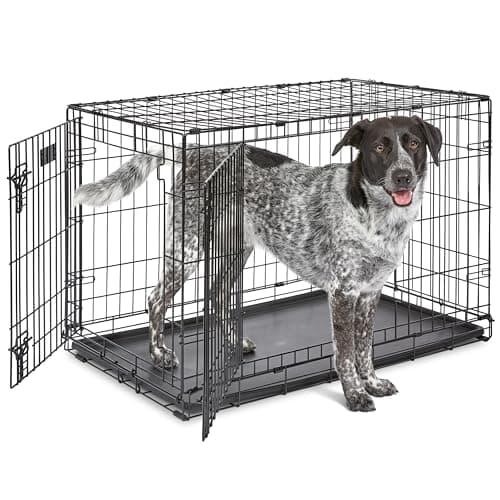 | MidWest Homes for Pets 36-Inch Double Door iCrateThe default crate for a 40-70 lb dog that is not trying to escape |
| 41/100 | $61.93 · Amazon |
| 2 | 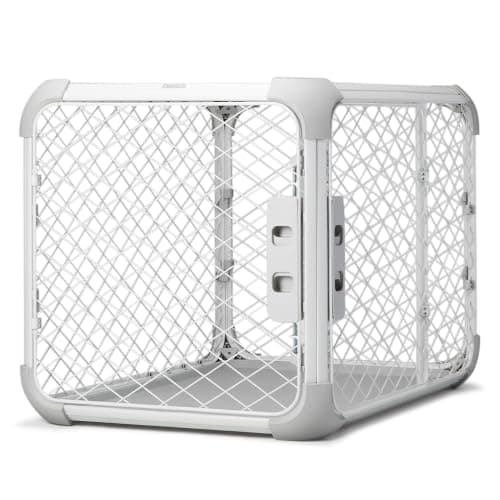 | Diggs Evolv Modular CrateA crate you can live with in a living room |
| 70/100 | $314.30 · Amazon |
| 3 | 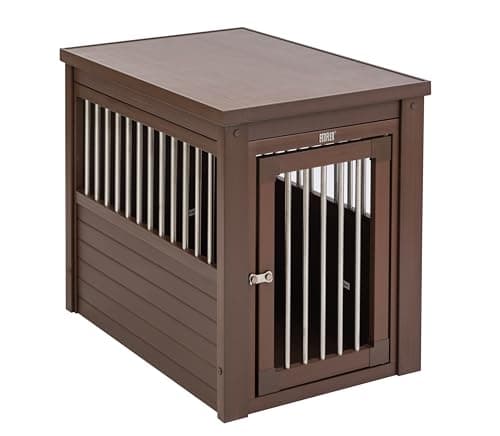 | New Age Pet ecoFLEX Habitat 'n' Home CrateThe only crate furniture here made from something that will not swell |
| 65/100 | $101.99 · Amazon |
| 4 | 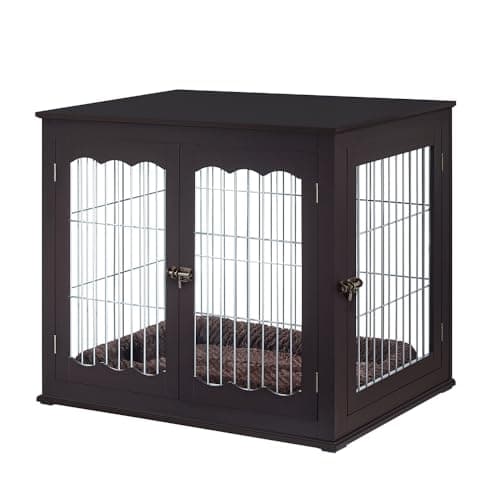 | unipaws Wooden Dog Crate End TableA double-door layout that suits an awkward room |
| 46/100 | $179.99 · Amazon |
Tap any row to jump to the full review. Specs are the manufacturer's own published figures; where a maker does not publish one we say "not published" rather than estimating it. Prices are pulled live from Amazon as of November 23, 2026; where we have no verified live price we show none rather than a stale number. #ad — how our links work.
The divider panel is the product
Crate sizing for an adult dog is a fixed problem: the dog has to be able to stand without ducking, turn around, and lie fully stretched out on its side. Crate sizing for a puppy is a moving problem, and it moves in the wrong direction for ordinary shopping advice.
A crate sized correctly for a ten-week-old puppy is far too small within three months. A crate sized for the adult dog is, from a house-training point of view, actively counterproductive now — a puppy that can soil one end and sleep dry at the other has no reason to hold on, and the whole mechanism of crate training depends on it not wanting to lie in a wet bed.
The divider panelresolves both. You buy the crate the adult dog will need and partition it down to a puppy-sized space, then move the panel back every few weeks. That is why the 36 inch iCrate leads this page rather than anything stronger or better made: MidWest includes the panel, states the size band (41–70 lb), and the crate costs less than a tenth of the premium options. One purchase covers the first year and the nine after it.
The practical rule for setting the panel: the puppy should be able to stand, turn and lie down, and not much more. Our crate sizing guide has the measurement method for both the puppy space and the adult crate.
Measure twice, because the listings disagree
This is a genuinely useful finding and it is specific to the crate most people are about to buy. For the same iCrate model number (1536DDU), two retailer listings publish exterior dimensions of 35.6 x 21.9 x 24.5 in and 36 x 23 x 25 in. Those differ by more than an inch in two axes.
If the crate is going into an alcove, under a worktop or between a sofa and a wall — which is where most of them go — an inch decides whether it fits. Measure your space against the larger figure and leave clearance for the door swing, and remember a double-door crate needs clearance on two sides or you lose the benefit you paid for.
The other number nobody will give you is the wire gauge. No listing and no MidWest page we could find states a gauge for the iCrate line, which means “durable” is the only strength claim on offer. It is the same refusal MidWest makes on the crate it markets as “professional-gauge,” and we document the pattern on heavy-duty crates under $500.
Latches, and the puppy that learns to open things
Most puppies do not escape crates. The ones that do almost never break a panel — they work the latch, and a dog that learns that trick at six months keeps it for life. This is the one axis where it is worth spending real money, and only if your dog shows you it is necessary.
The iCrate’s latches are slide bolts, described on the listing only as “secure latches.” Slide bolts are the bottom rung: the easiest type for a determined dog to nose or paw open. For a settled puppy that is fine, and it is what the overwhelming majority of households need.
The Diggs Evolv is the answer if it is not. Its dual latching system is a design aimed squarely at this failure, and Diggs states the two locks cannot be opened from inside the crate. It also publishes more sizing information than almost any crate maker — five sizes with both height and weight bands, which for a growing dog is exactly what you want to plan against — comes apart into panels without tools, and is the only crate here that does not look like kennel equipment.
What to hold against it, honestly: Diggs will not publish a steel gauge; its one-year warranty excludes damage caused by dogs who chew or are not crate-trained, which is a strange exclusion on a crate at this price and squarely relevant to a puppy; and Diggs is sometimes remembered as a crash-certified brand when nothing it currently sells is certified — its only CPS certificate was on the Passenger Carrier and it has been delisted. If latch escapes are the actual problem, the escape-proof crate roundup ranks the whole latch ladder, and how to make a crate escape-proof covers what you can retrofit to one you already own.
The material question nobody asks until it is too late
Puppies have accidents. That is not a training failure, it is a fact of the first few months, and it is the reason crate furniture needs a different conversation from crates.
A veneered particle-board crate table is the standard answer in a living room and it is the wrong one for a puppy: particle board swells where liquid reaches it, and once it has swelled the veneer lifts and the panel is finished. The New Age Pet ecoFLEX is on this page because its material is a recycled wood-polymer composite which the maker states will not warp, crack or absorb moisture. It wipes clean, and the material does not fail the first time something spills on it.
Be clear about what it is not: no chew resistance and no chew warranty. It is a den for a settled dog, not a containment crate, and a puppy in a teething phase that is left alone with a composite panel will get somewhere with it. It is also considerably more expensive than the wooden equivalents and heavy once assembled.
The unipaws table is here for one specific reason: door configuration. When the crate has to live against a particular wall, being able to choose where the door is matters more than any material claim, and it puts metal accents at the wear points rather than bare timber everywhere. Same fundamental limitation as all wooden crate furniture — no chew resistance — plus a finish that marks easily and an assembly that is more involved than the simpler cabinets. The full furniture field is on the crate furniture roundup.
What goes inside it, and what does not
Two rules, and the second one costs people money. First, nothing soft and valuable goes in a crate with a teething puppy — not because the puppy is badly behaved, but because a swallowed piece of bedding is a worse problem than a bare pan. A cheap washable mat you can replace without regret is the right call, and owning two so one is always clean matters more than any fabric claim: the crate pad roundup ranks that field, and beds for puppies is the page for the bed the puppy sleeps on outside the crate.
Second: a wire crate is never a car restraint. In the Center for Pet Safety’s 2015 crate study, wire crates failed, and CPS’s conclusion is that they should be treated as distraction prevention rather than protection. None of the crates on this page carries any crash certification. If the puppy is travelling, the crash-tested crate page lists only what CPS has actually certified, and crate versus playpen covers the containment option people usually consider alongside this one.
The picks, ranked
1. MidWest Homes for Pets 36-Inch Double Door iCrate
Durability score 41/100Best for: The default crate for a 40-70 lb dog that is not trying to escape
The right default for a medium dog at home, and the crate most medium-dog owners should buy. It is not escape-proof and it is not a car crate.
- Size band
- 36 in, stated for 'Medium-Large Breeds, 41-70 lbs' (MidWest listing, model 1536DDU)
- Exterior
- Retailer listings disagree: 35.6 x 21.9 x 24.5 in and 36 x 23 x 25 in for the same model number
- Wire gauge
- Not published. No listing or MidWest page we could find states a gauge for the iCrate line
- Doors
- Two, so the crate can open to a wall or into a room
- Latches
- Slide-bolt — described on the listing as 'secure latches', with no further specification
- Pan
- Leak-proof plastic pan; divider panel included
- Crate weight
- 22 lb (retailer listing)
- Crash certification
- None. CPS's position on wire crates is that they will not provide significant protection in a crash
Pros
- Two doors at this price is genuinely useful: a 36 in crate rarely fits a room in only one orientation
- The divider panel means one crate covers a puppy and the adult dog it becomes, which is the whole argument for buying at 36 in
- Folds flat, weighs 22 lb, and costs less than a tenth of the premium crates on this page
- Leak-proof pan rather than a tray that seeps, which is the component most often cheapened at this price
Cons
- No wire gauge published anywhere, so 'durable' is the only strength claim on offer — the same refusal MidWest makes on the 'professional-gauge' Ultima Pro
- Two retailers publish exterior dimensions for this exact model number that differ by more than an inch in two axes; measure your space against the larger figure
- Slide-bolt latches are the easiest latch for a determined dog to work, and this is not an escape-proof crate
- Never a car crate: wire crates are distraction prevention, not crash protection
How we assessed it: on published materials, hardware specs and construction — not long-term chew-tested. We say so because it is true, and because a claim we cannot back is worth nothing to you.
#ad Price as of November 23, 2026; Amazon prices change often, so check before you buy. How our links work.
2. Diggs Evolv Modular Crate
Durability score 70/100Best for: A crate you can live with in a living room
The best-designed crate here and a genuinely clever latch — but it is not crash-certified, and its warranty walks away from chewers.
- Materials
- High-strength steel wire on a reinforced frame; nylon-coated steel, diamond mesh, rounded pet-safe edges (Diggs)
- Latch
- Dual latching system — Diggs states the two locks cannot be opened from inside the crate
- Capacity
- S up to 16 in / 30 lb; M 16–18 in / 30–50 lb; Intermediate 18–22 in / 50–70 lb; L 22–28 in / 70–90 lb; XL up to 29 in / 90–110 lb
- Size on this listing
- Intermediate — dogs 18–22 in tall (50–70 lb), Ash
- Warranty
- 1 year — and Diggs' warranty terms exclude 'damage caused by dogs who are not crate-trained or who chew on the product'
- Steel gauge
- Not published
- Crash certification
- None. Diggs holds no CPS certification at all today - its Passenger Carrier was certified at 18 lb in October 2021 and has since been delisted
Pros
- The dual latch genuinely defeats the paw-and-nose crate escapes that beat a single slide bolt — Diggs states it cannot be worked from inside
- Five sizes with published height AND weight bands, which is more than almost any crate maker publishes
- Modular panel construction, so it comes apart for storage without tools
- The only crate here that does not look like a piece of kennel equipment
Cons
- Diggs is sometimes remembered as a certified brand; its only CPS certificate was on the Passenger Carrier and it has been delisted. Nothing Diggs sells is crash-certified
- The warranty excludes chewers outright, which is a strange exclusion on a crate this expensive
- Diggs will not publish the steel gauge
- It breaks down into panels rather than folding flat — easier to store than a rigid crate, not as quick as a true collapsible
How we assessed it: on published materials, hardware specs and construction — not long-term chew-tested. We say so because it is true, and because a claim we cannot back is worth nothing to you.
#ad Price as of November 23, 2026; Amazon prices change often, so check before you buy. How our links work.
3. New Age Pet ecoFLEX Habitat 'n' Home Crate
Durability score 65/100Best for: The only crate furniture here made from something that will not swell
The right crate furniture, because it is the only one here whose material does not fail the first time something spills on it.
- Material
- ecoFLEX — a recycled wood-polymer composite, per New Age Pet
- Moisture behavior
- Will not warp, crack or absorb moisture, per the manufacturer
- Door
- Metal barred door
- Chew resistance
- Not rated; no chew warranty
- Weight rating
- Published per size by New Age Pet
Pros
- A wood-polymer composite rather than veneered particle board, which is the difference between a crate that survives one accident and one that does not
- Genuinely furniture-grade in a living room without pretending to be a containment crate
- Wipes clean, and the material does not swell where liquid reaches it
Cons
- No chew resistance and no chew warranty — this is a den for a settled dog, not a containment crate
- Considerably more expensive than the wooden equivalents
- Heavy and not portable once assembled
How we assessed it: on published materials, hardware specs and construction — not long-term chew-tested. We say so because it is true, and because a claim we cannot back is worth nothing to you.
#ad Price as of November 23, 2026; Amazon prices change often, so check before you buy. How our links work.
4. unipaws Wooden Dog Crate End Table
Durability score 46/100Best for: A double-door layout that suits an awkward room
The one to buy if the room dictates where the door has to be. Otherwise there is nothing to choose between the wooden options.
- Material
- Wood with metal accents; per the live listing
- Doors
- Multiple door configurations available
- Chew resistance
- None; no chew warranty
- Weight rating
- Published on the listing
Pros
- Door configuration options genuinely matter when the crate has to live against a specific wall
- Metal accents at the wear points rather than bare timber everywhere
Cons
- Same fundamental limitation as all wooden crate furniture: no chew resistance
- Assembly is more involved than the simpler cabinets
- Finish marks easily
How we assessed it: on published materials, hardware specs and construction — not long-term chew-tested. We say so because it is true, and because a claim we cannot back is worth nothing to you.
#ad Price as of November 23, 2026; Amazon prices change often, so check before you buy. How our links work.
Which one, by the situation
- A normal puppy, a normal house. The 36 inch iCrate with the divider. It is the budget pick and the right default, used as a home crate only.
- A puppy that has already opened a latch.Diggs Evolv, for the dual latch Diggs says cannot be worked from inside — with the chewer exclusion in its warranty understood.
- The crate lives in a sitting room. New Age Pet ecoFLEX, because the material survives accidents in a way particle board does not.
- The room dictates where the door has to be. The unipaws table, for the door configuration, accepting there is no chew resistance.
- A giant-breed puppy.None of these for long — a 36 inch crate is outgrown. Buy the adult size from the large-dog crate roundup and partition it if it includes a panel.
The bottom line
Buy the adult crate, use the divider, and spend the savings on anything else. The thing to shop for is the panel and the latch, not the wire, because nobody publishes a gauge and the escapes that happen are latch escapes. Measure your alcove against the larger of the two published dimensions, keep soft bedding out until the teething phase is done, and never treat a wire crate as car safety. When the dog stops growing, the price-led field is on crates under $200 and the construction-led field on heavy-duty crates under $500.
Frequently asked questions
What size crate should I buy for a puppy?
Buy the size the adult dog will need and partition it with a divider panel. A crate sized for a ten-week-old puppy is too small within three months, and a full-size crate without a divider is counterproductive now - a puppy that can soil one end and sleep dry at the other has no reason to hold on, and crate training depends on it not wanting to lie in a wet bed. Set the panel so the puppy can stand, turn and lie down, and not much more, then move it back every few weeks.
What is the best crate for a puppy?
The MidWest 36-inch double-door iCrate, for one structural reason: the divider panel is included, so a single crate covers a puppy and the 41-70 lb adult it becomes. Two doors matter more than they sound, because a 36 inch crate rarely fits a room in only one orientation, and the leak-proof pan is the component usually cheapened at this price. Its limits are real: no wire gauge is published anywhere, the slide-bolt latches are the easiest type for a determined dog to work, and it is not an escape-proof crate or a car crate.
Do I need a divider panel for a puppy crate?
Yes, if you are buying the adult size - which you should be. The divider is what makes a single purchase cover the whole life of the dog, and it is what keeps the crate the right size for house-training in the meantime. It is also the cheapest feature in this category: the crate we rank first includes one and costs less than a tenth of the premium options. If a crate you want does not include a panel, check whether the maker sells one before buying.
Will a puppy chew its way out of a crate?
Panels, almost never. Latches, sometimes - and a dog that learns to open a latch at six months keeps the trick for life, which is the one failure worth spending money against. Slide bolts are the bottom rung of latch design and what most cheap crates ship with. The Diggs Evolv is the upgrade: a dual latching system Diggs states cannot be opened from inside the crate. Note its warranty excludes damage caused by dogs who chew or are not crate-trained, which is a strange exclusion on a crate at that price.
Is crate furniture a good idea for a puppy?
Only if you pick the material carefully. Puppies have accidents, and a veneered particle-board crate table swells where liquid reaches it - once it has swelled, the veneer lifts and the panel is finished. The New Age Pet ecoFLEX is a recycled wood-polymer composite that the maker states will not warp, crack or absorb moisture, which makes it the one crate furniture here that survives the first few months. It has no chew resistance and no chew warranty, so it is a den for a settled dog rather than a containment crate.
Can I put a bed in a puppy's crate?
Not a soft or valuable one, and not because the puppy is badly behaved. A swallowed piece of bedding is a far worse problem than a bare crate pan, and a teething puppy left alone with a cushion will test it. Use a cheap washable mat you can replace without regret, and own two so one is always clean - that does more for hygiene than any fabric claim. Save the proper bed for outside the crate until the teething phase has passed.
Sources
Every spec on this page traces to one of these. Where a manufacturer does not publish a figure, we say “not published” rather than estimating it.
- MidWest Homes for Pets - FAQ and warranty terms: drop-pin corner construction with a reinforced L-bar to stop side panels bowing, three slide-bolt latches per door on the Solutions 54, and the warranty sentence 'The warranty does not cover damage by the dog.' No wire gauge is published for any MidWest crate
- Diggs - Evolv crate page: the dual latching system Diggs states cannot be opened from inside, five sizes with published height AND weight bands, nylon-coated steel with diamond mesh, and a one-year warranty that excludes damage caused by dogs who chew or are not crate-trained. No steel gauge is published
- Center for Pet Safety - 2015 crate study results: the finding that wire crates 'will not provide significant protection in the case of an accident'. Every wire and plastic crate on these pages is a home or travel crate, never a crash restraint